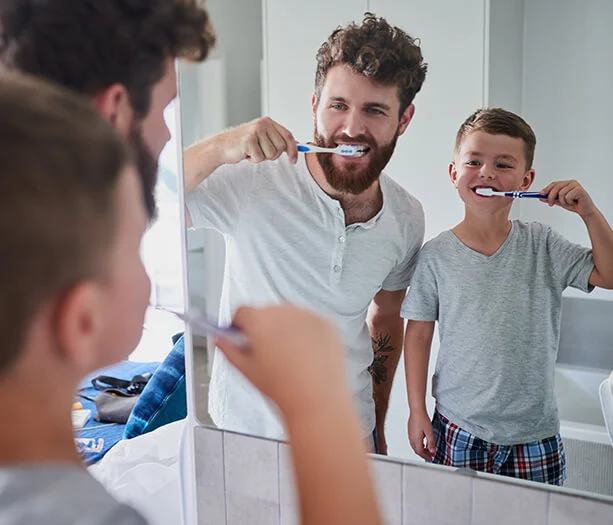



Your back teeth are covered in tiny grooves and pits, and food and bacteria love to settle there. A dental sealant is a thin, tooth-colored coating painted over those chewing surfaces. It fills in the grooves and creates a smooth, protective shield, which makes the tooth easier to clean and harder for decay to take hold. Think of it as a raincoat for the part of your tooth that takes the most abuse.
Sealants are one of the simplest ways to protect your molars. According to the CDC, sealants can prevent up to 80 percent of cavities for two years and continue to protect against 50 percent of cavities for up to four years. Patients value several other benefits, too:
Preventing decay is almost always simpler than repairing it.
Sealant placement is quick and typically requires no drilling. We clean and dry the tooth, paint the sealant on the chewing surface, and then harden it with a curing light or let it set on its own. The whole process often takes just a few minutes per tooth. You can eat and drink normally afterward, so you can go right back to your day.
Sealants are designed to last for many years, but chewing gradually wears them down. That is why we check them during your regular exams and cleanings. If a sealant has worn thin or chipped, we can usually repair or reapply it. Keeping up with your visits and brushing well at home helps your sealants do their job for as long as possible.
Dentists have used sealants for many years, and they’re a well-established preventive treatment. They sit on top of the tooth rather than replacing tooth structure, so in most cases there’s nothing to numb. If you have questions about the materials we use or any allergies, tell our team, and we are happy to talk through them before treatment begins.
Let’s talk about your smile. Our team can help you plan your next step.
Whether you are new to our office or planning your next visit, these are the questions we hear most often, and our team is glad to help with anything else.
We are a fee-for-service practice, so we are not in-network with insurance plans. We file your paperwork as a courtesy and provide any documents your insurance company needs, so you can pursue the reimbursement your plan allows.
We accept cash, debit and credit cards, and CareCredit, and we offer in-house payment plans. Patients without insurance can also join our in-house membership plan. Our team is happy to review your options before treatment begins.
Your first visit is a one-on-one consultation where Dr. Rigby learns about your dental history and goals. Please bring any X-rays taken within the last year and your completed new patient forms, or arrive ten to fifteen minutes early to fill them out.
Rockingham ProDental brings together prosthodontic training, an on-site lab, and a team that treats you like family. Dr. Rigby’s Ohio State education and 17+ years of private practice experience as a prosthodontist support everything we do, from a first cleaning to a full-mouth restoration, all within reach for patients across the Shenandoah Valley.
Come see what a friendly, clear, and collaborative dental visit feels like. We would love to help you plan your next step, and you can request an appointment through our contact form.